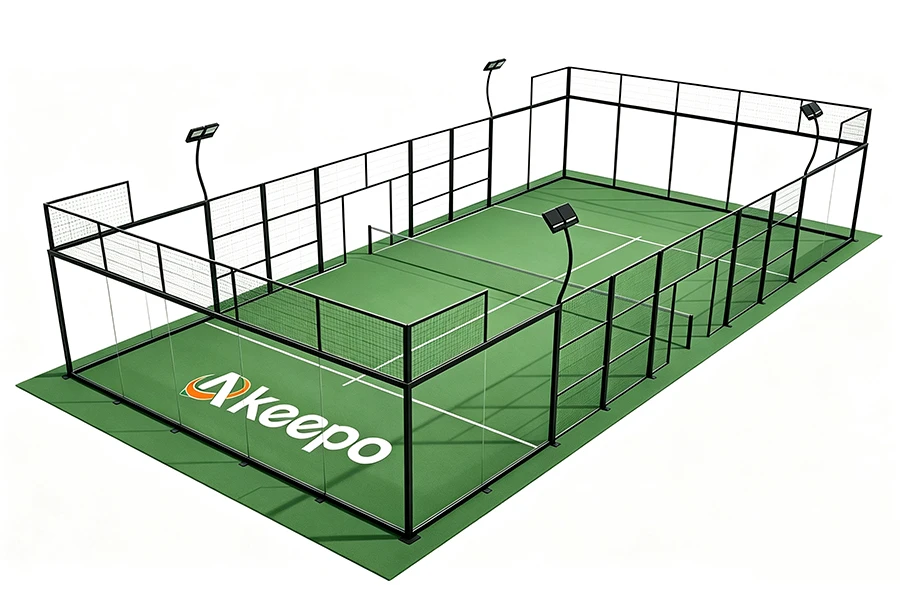
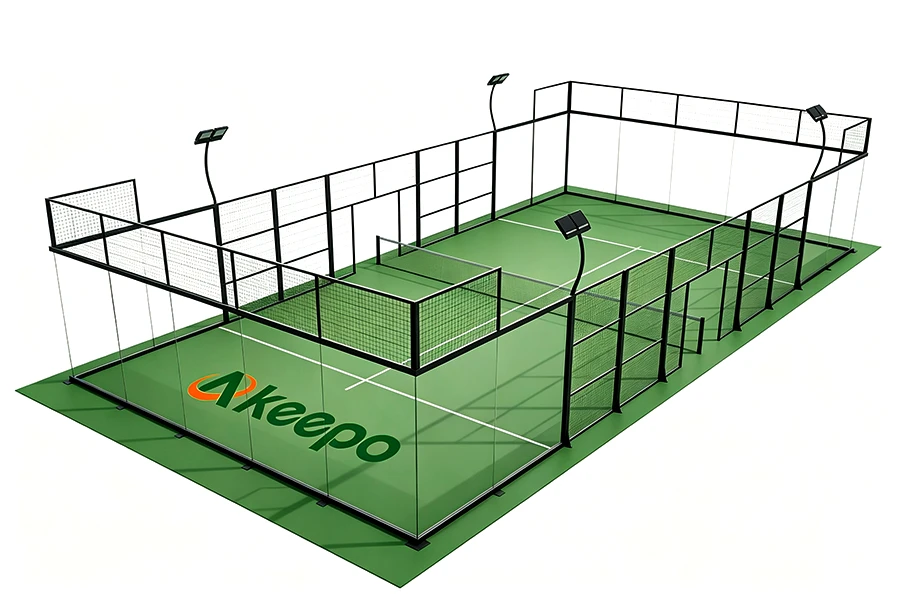
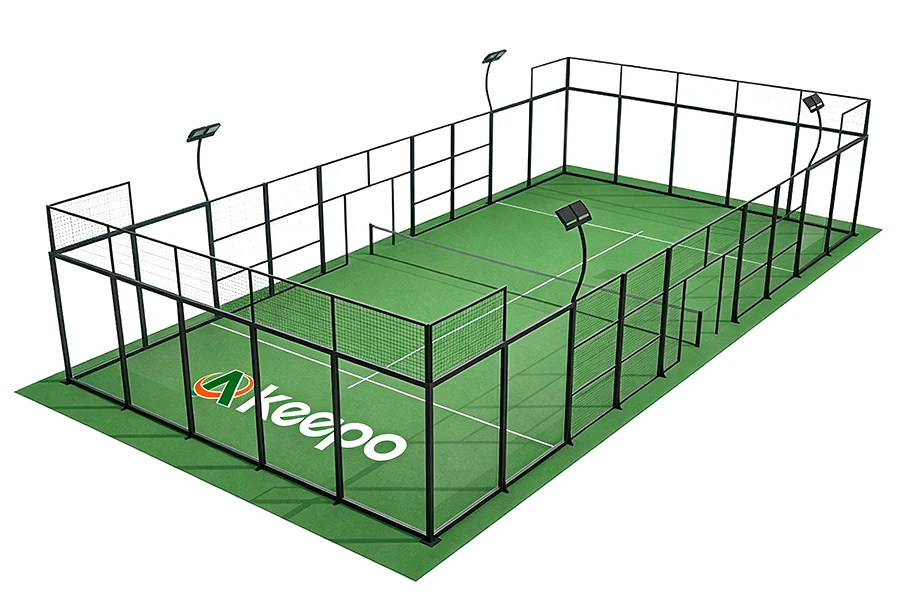
Starting a successful padel club requires more than simply purchasing a padel court. You need to validate local demand, select the right site, plan the padel infrastructure, obtain approvals, choose reliable padel court builders, and create a community that encourages people to play padel regularly.
Akeepo provides padel court solutions for commercial venues, sports clubs, and private facilities, including court configuration, customization, delivery, and installation. Learn more at Akeepo Padel.
1. Validate the Market
Before signing a lease or ordering equipment, investigate whether your target area can support a new padel facility.
Assess:
- The number of existing padel clubs within a practical driving distance.
- Local demographics, income levels, population density, and sports participation.
- Competitor court prices, membership plans, coaching programs, and opening hours.
- Demand from tennis clubs, gyms, hotels, schools, residential communities, and corporate groups.
- Whether the club will operate indoors, outdoors, or as a mixed facility.
Useful demand indicators include paid trial sessions, a waiting list, founding memberships, coach commitments, and repeat bookings. Market research should come before purchasing courts or committing to a site.
2. Select the Right Location
Location affects construction cost, occupancy, accessibility, and long-term profitability.
Check the following before signing a lease:
- Planning and zoning permission for sports or recreational use.
- Road access, visibility, parking, and public transportation.
- Available electricity, water, drainage, and internet connectivity.
- Noise restrictions caused by ball impact, player communication, and tournaments.
- Indoor building height, columns, entrances, ventilation, and fire-safety conditions.
- Space for reception, changing rooms, toilets, storage, social areas, and future expansion.
A professional site survey can help determine how many courts will fit and whether additional civil works are necessary. For an indoor club, the existing building often determines both the court layout and the overall project cost.
3. Create the Court Design
Your court design should balance player experience, construction requirements, operating efficiency, and future growth.
A typical project may include:
- Standard doubles padel courts.
- Premium panoramic courts for tournaments or visual impact.
- Indoor or outdoor court systems.
- Artificial turf, silica sand, tempered glass, steel frames, fencing, and LED lighting.
- Reception and lounge areas positioned to improve visibility of the courts.
- Spectator zones, photography points, café areas, or retail displays.
Consider court customization if you want the club to stand out. Custom elements may include:
- Club colors and powder-coated steel structures.
- Branded glass or fencing.
- Custom logos on turf, nets, and entrance gates.
- Special lighting layouts.
- Customized access gates and player pathways.
- Tournament branding and sponsor panels.
Akeepo’s one-stop padel solutions combine manufacturing, technical expertise, and project delivery, which can simplify coordination between the court supplier, installer, and project owner.
4. Plan Padel Construction
Padel construction normally involves more than assembling the court structure. The complete scope may include:
- Site preparation and groundworks.
- Concrete slab or suitable foundation system.
- Drainage and waterproofing.
- Court frame, glass, fencing, and access doors.
- Artificial turf and sand infill.
- LED lighting and electrical connections.
- Reception, changing rooms, toilets, and social spaces.
- Booking software, access control, cameras, and Wi-Fi.
- Safety inspection, testing, and final handover.
Request a detailed quotation that separates court equipment from foundations, freight, customs, installation, lighting, electrical work, permits, and interior construction. The court quotation alone should not be treated as the complete investment budget.
5. Choose Experienced Court Builders
The right padel court builders should be able to support the project from technical planning through installation and after-sales service.
Ask potential suppliers for:
- Product specifications and material details.
- Glass thickness and safety certification.
- Structural calculations and wind-load information.
- Turf specifications and replacement recommendations.
- Lighting performance and energy requirements.
- Installation drawings and foundation requirements.
- Manufacturing lead time and shipping terms.
- Local installation partners or technical supervision.
- Warranty, spare parts, maintenance, and response times.
- References from completed commercial projects.
Akeepo can be considered as a supplier for projects requiring padel court manufacturing, customization, delivery, and installation support. Visit www.akeepo-padel.com to discuss your club concept and project requirements.
6. Build the Business Model
Your financial model should include both initial investment and operating expenses.
Main startup costs
- Land lease or property acquisition.
- Design, engineering, permits, and professional services.
- Foundations and civil works.
- Padel courts, turf, glass, fencing, and lighting.
- Indoor building improvements or roofing.
- Reception, toilets, changing rooms, and lounge areas.
- Booking, payment, access-control, and security systems.
- Marketing, signage, staff recruitment, and working capital.
- Contingency for construction delays and unexpected costs.
Possible revenue streams
- Hourly court bookings.
- Monthly or annual memberships.
- Coaching and beginner courses.
- Leagues, tournaments, and Americano events.
- Corporate events and private bookings.
- Equipment rental and retail sales.
- Café, drinks, food, and sponsorship packages.
- Advertising space on glass, fencing, and digital channels.
Model conservative, expected, and optimistic scenarios. Your calculations should use realistic court occupancy, actual average booking prices, seasonal demand, maintenance expenses, and staffing costs.
7. Obtain Approvals and Insurance
Before construction begins, confirm the local legal requirements. Depending on the country and project type, you may need:
- Planning or building permission.
- Sports-facility operating approval.
- Structural and electrical compliance documents.
- Fire-safety certification.
- Accessibility compliance.
- Noise-impact assessment.
- Food-and-beverage licensing.
- Public-liability and property insurance.
- Employment and workplace-safety coverage.
Work with a local architect, engineer, planning consultant, or contractor who understands sports facilities and local regulations.
8. Prepare the Club for Opening
A successful club needs an operating system, not only attractive courts.
Prepare:
- Online booking and payment.
- Membership rules and cancellation policies.
- Court-maintenance schedules.
- Staff training and customer-service procedures.
- Coaches and beginner programs.
- Equipment rental and ball sales.
- Cleaning, lighting, glass, turf, and fencing inspections.
- Emergency procedures and first-aid equipment.
- A customer database and communication system.
Create a community before opening by launching social media accounts, collecting founding-member registrations, organizing trial sessions, and partnering with local coaches or sports influencers.
A weekly social event, beginner class, or Americano tournament can help transform a court rental venue into an active padel life community. Clubs should track return visits, booking frequency, membership conversion, and customer retention from the beginning.
9. Launch and Promote the Club
Your pre-launch marketing can include:
- A landing page with the opening date and registration form.
- Google Business Profile and map listing.
- Instagram, Facebook, TikTok, and local sports-community promotion.
- Construction-progress videos and court-installation content.
- Founding-member discounts.
- Free or low-cost introductory sessions.
- Partnerships with gyms, hotels, schools, companies, and tennis clubs.
- An opening tournament or charity event.
- Professional photos and videos showing the finished court design.
Position the club around more than court rental. Promote an experience built around health, competition, friendship, coaching, and play padel.
Final Checklist
Before opening, confirm that you have:
- Completed market and competitor research.
- Validated the site, access, utilities, and zoning.
- Approved the court layout and facility design.
- Selected qualified padel court builders.
- Confirmed the complete padel construction budget.
- Obtained permits and insurance.
- Ordered courts, lighting, turf, and accessories.
- Completed foundations and installation.
- Tested booking, payment, lighting, and access systems.
- Hired staff and coaches.
- Built a pre-launch customer database.
- Planned the opening event and marketing campaign.
- Established a maintenance and warranty process.
Akeepo can support projects that need customized courts and coordinated padel infrastructure, from court selection and court customization to delivery and installation. For a detailed quotation, provide the project location, number of courts, indoor or outdoor requirements, preferred court design, site dimensions, and installation expectations.
Back to News Start Your ProjectRecommended Products